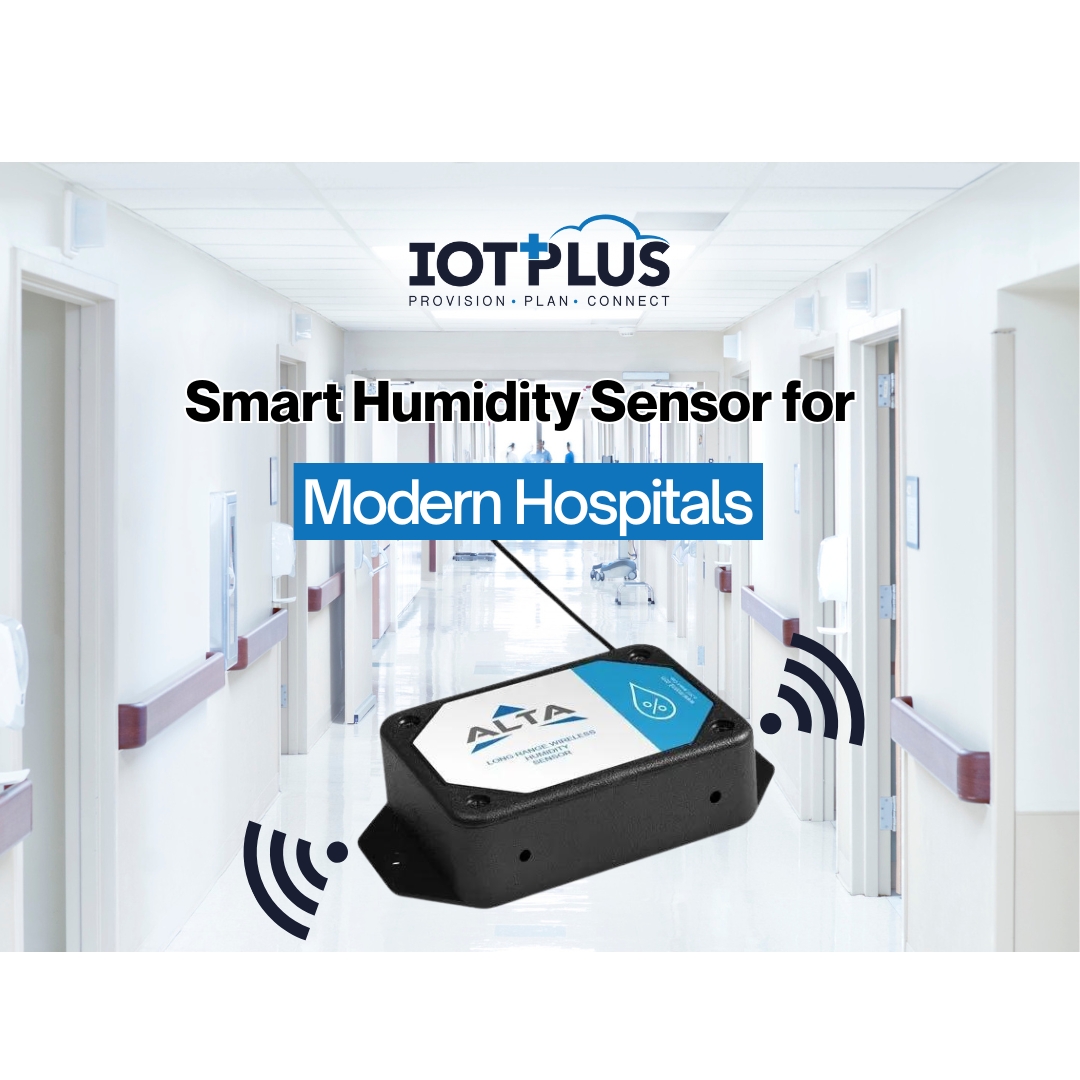
In today’s rapidly evolving healthcare landscape, IoT (Internet of Things) technology plays a vital role in improving patient care, safety, and operational efficiency. Among the many smart devices making an impact, the IoT humidity sensor stands out as a crucial tool in healthcare environments. These sensors monitor and control humidity levels in real-time, ensuring that conditions remain within safe and optimal ranges.

What Is an IoT Humidity Sensor?
An IoT humidity sensor is a smart device that continuously measures moisture levels in the air and transmits this data over a network. Unlike traditional humidity sensors, these IoT-enabled devices can be connected to cloud-based systems, mobile apps, and central monitoring platforms. This allows for real-time alerts, automated responses, and data analytics, helping facilities maintain optimal indoor air quality.
IOT PLUS explains and helps by providing a deeper understanding of how these devices integrate into existing healthcare infrastructure. Their smart solutions offer robust dashboards and analytics to interpret humidity trends, ensuring proactive responses to environmental changes.
Importance of Humidity Control in Healthcare
Humidity control is critical in hospitals, clinics, laboratories, and pharmaceutical storage areas. High or low humidity levels can cause:
-
Growth of mold, bacteria, and viruses
-
Degradation of sensitive medical equipment
-
Reduced shelf life of medications and vaccines
-
Discomfort for patients, especially those with respiratory issues
An IoT humidity sensor continuously tracks these changes, helping maintain compliance with strict health and safety standards such as those outlined by ASHRAE and CDC guidelines.
How IoT Humidity Sensors Help Healthcare Systems
-
Real-Time Monitoring
IoT humidity sensors provide 24/7 remote monitoring, ensuring environmental conditions are always within the required range. Alerts can be sent instantly via SMS, email, or app notifications. -
Automated Control Systems
These sensors can be integrated with HVAC systems to automatically adjust temperature and humidity levels, promoting a healthier and safer environment. -
Data Logging and Compliance
Healthcare facilities are required to maintain strict documentation. IoT sensors automatically log data, making it easier to generate compliance reports for audits and certifications. -
Preventive Maintenance
By monitoring trends over time, facilities can predict equipment failures or environmental risks and take action before they become costly problems. -
Energy Efficiency
Maintaining optimal humidity levels also reduces the load on heating and cooling systems, leading to energy savings.
IOT PLUS Explains and Helps
IOT PLUS explains how integrating IoT humidity sensors into your healthcare system can provide not just safety, but also operational efficiency and cost savings. Their tailored IoT solutions help healthcare professionals monitor environments from anywhere, receive actionable insights, and automate critical responses.
Whether you manage a hospital, pharmacy, or medical lab, IOT PLUS helps you transform your facility into a smart, responsive environment that prioritizes patient safety and regulatory compliance.