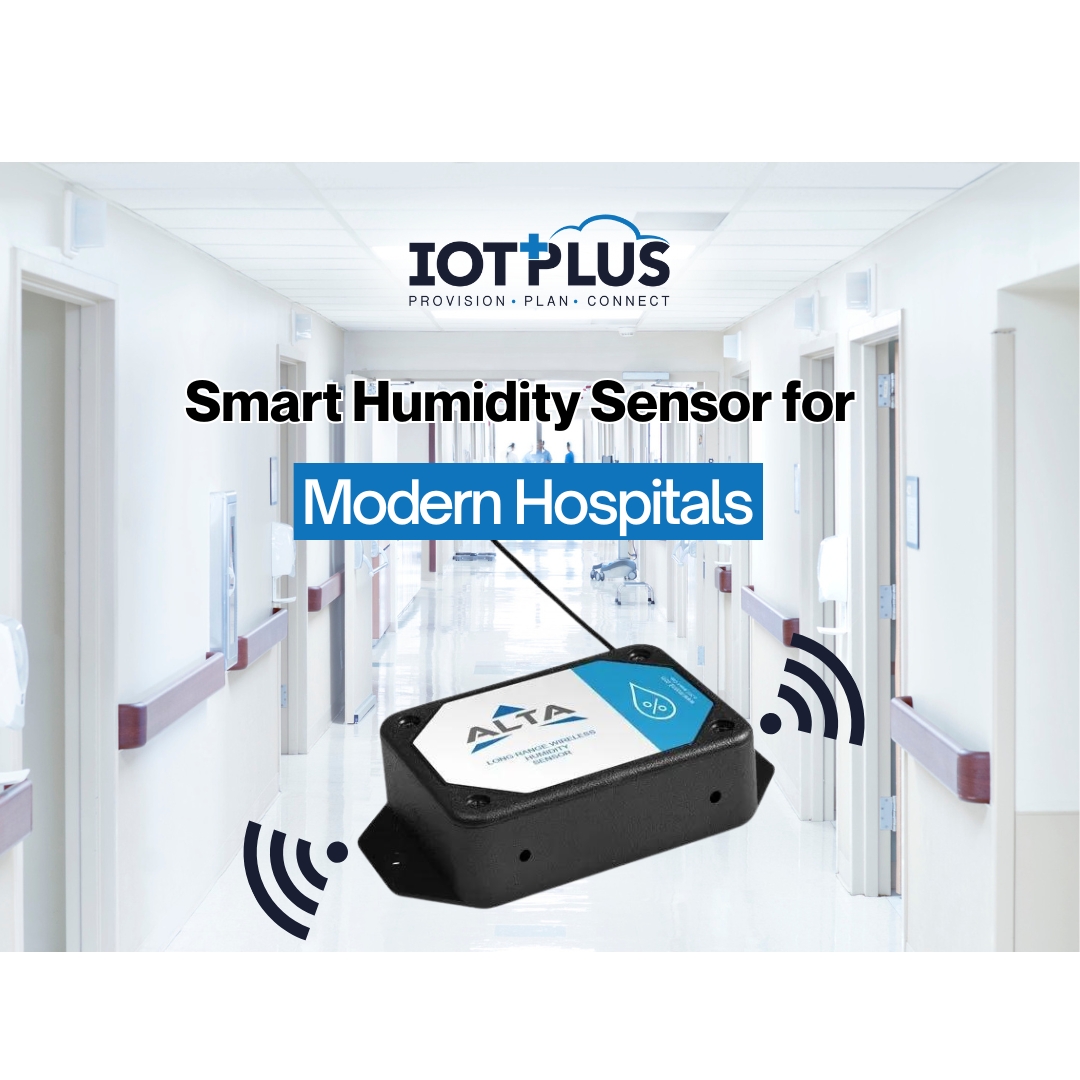
The healthcare industry is rapidly evolving, and one of the most impactful innovations is the use of IoT sensors in medicine monitoring. From patient safety to medicine storage and real-time data tracking, IoT (Internet of Things) is making healthcare smarter, safer, and more efficient. Companies like IoT PLUS are leading the way by providing intelligent sensor-based solutions that ensure medical environments operate with accuracy and reliability. Let’s explore the top benefits of using IoT sensors in medicine monitoring and how IoT PLUS explains and helps healthcare providers.

1. Real-Time Monitoring and Instant Alerts
One of the biggest advantages of IoT in medicine monitoring is real-time data collection. Sensors can continuously track vital parameters such as temperature, humidity, air quality, and patient vitals. If any parameter goes out of range, automatic alerts are sent to staff, allowing immediate action.
How IoT PLUS helps:
IoT PLUS provides temperature and humidity sensors for vaccine fridges, cold storage, and medical supply rooms. Their system alerts staff instantly if conditions become unsafe, preventing medicine spoilage.
2. Improved Medication Safety and Storage Conditions
Many medicines, including vaccines, insulin, and biologics, are sensitive to environmental changes. Incorrect storage can reduce effectiveness or cause health risks. By using IoT sensors, healthcare facilities maintain optimal storage conditions 24/7 with automated tracking and logging.
What IoT PLUS explains:
We explain how monitoring temperature, humidity, and even power supply protects sensitive drugs. IoT PLUS ensures compliance with storage regulations and prevents costly losses.
3. Enhanced Patient Health Monitoring
IoT sensors can monitor patient vitals such as heart rate, oxygen saturation, and blood pressure remotely. This enables proactive care, early detection of health issues, and reduced hospital readmissions. Remote IoT monitoring is especially useful for chronic disease management and elderly care.
4. Compliance with Healthcare Regulations
Healthcare facilities must follow strict regulatory standards for medicine storage, environmental control, and documentation. IoT sensors automatically record data and create digital logs that can be used for audits and compliance.
How IoT PLUS supports compliance:
IoT PLUS provides accurate data logs and automated reporting so hospitals can meet regulatory requirements without manual recordkeeping.
5. Cost Savings and Operational Efficiency
IoT technology reduces waste by preventing medicine spoilage, power failure impacts, equipment downtime, and theft. It also decreases the need for manual inspections and improves staff productivity. Over time, this leads to significant cost savings for hospitals and pharmacies.
IoT PLUS helps by:
Monitoring power supply, generator status, door access, and motion activity. Their smart sensors ensure uninterrupted operations and resource efficiency.
6. Data Analytics and Predictive Insights
IoT sensors generate valuable data that can be used for predictive analytics. Healthcare providers can identify trends, forecast failures, improve inventory management, and make data-driven decisions.
IoT PLUS advantage:
Our platform analyzes sensor data to help users optimize performance, improve workflows, and prevent issues before they occur.
Conclusion
The use of IoT sensors in medicine monitoring delivers powerful benefits such as real-time monitoring, improved medication safety, enhanced patient care, regulatory compliance, cost savings, and predictive analytics. With advanced solutions from IoT PLUS, healthcare providers can monitor temperature, humidity, air quality, access, power, and more—ensuring safe storage, reliable operations, and better outcomes. As IoT adoption grows, smart medicine monitoring will become a core pillar of modern healthcare.